
Arrest Warrants in Union County
An arrest warrant is a judge's order telling an authorized officer to arrest a person named in a criminal case. New Mexico's criminal forms and NMSA 31-1-4 tie the process to a complaint, an affidavit, probable cause, and prompt presentation before the court after arrest. In Union County, District Court handles felonies. Magistrate Court covers misdemeanors and felony preliminary hearings. Whichever court issues the warrant controls the record. Release conditions and cancellation go back to it too. The New Mexico criminal forms index is the official source for the form family.
Union Arrest Warrant Contents
Case Lookup may show the case, not the warrant. The field list comes from blank Union County forms. The statewide court workflow, not any private person's record, fills in the rest.
| Warrant or document number | Identifier tied to the case and court. |
|---|---|
| Case and court | District or Magistrate location, case category, year, and sequence. |
| Charge and affidavit | Criminal charge and the complaint or sworn factual support. |
| Judge and issue date | The judicial officer and date attached to the process. |
| Bond or release condition | Any amount or condition written by the court; no Union schedule was published. |
| Service or return | Issued, served, cancelled, returned, or restricted event information. |
Ask the Union County clerk whether the visible public event is an arrest warrant, a bench warrant, or some other process.
Union District Court's Felony Route
The Union County District Court sits at 100 Court Street, Suite 5, in Clayton. Its listed number is 575-374-9577. Hours are 8 a.m. to 4 p.m. on weekdays. The window stays open through lunch, and this is the first call when the case papers show a felony or a District Court criminal matter.
Call before you appear in person. Union County's court publishes no walk-in surrender protocol, bond schedule, booking window, or other pre-arrest rule.
An Arrest Warrant Is Not FTA Process
Rule 6-205 separates arrest warrants on an underlying charge from FTA bench warrants. A missed hearing leads to a bench warrant. Probable cause on the charge produces an arrest warrant. In a Union County case history the two labels can look alike, so ask the court to identify the event.
| Process | What starts it | First confirmation |
|---|---|---|
| Arrest warrant | Criminal charge and probable cause. | Issuing criminal court and counsel. |
| FTA bench warrant | Missed appearance or court noncompliance. | Court that set the hearing. |
| Summons | Notice commanding a court appearance. | Issuing court, before assuming a warrant exists. |
A warrant event is not always a new Union County charge, so ask for the charge classification and case number.
Serving Union County Arrest Warrants
The warrant directs an officer to make the arrest. The Union County Sheriff's Office is the local county contact. The sheriff posts no public chart of service assignments and lists no separate warrant unit number, so do not assume every arrest warrant is served by the sheriff. Clayton municipal police may handle municipal process. State or other agencies can encounter a state warrant as well. Service and custody questions go to the sheriff. The issuing court owns the legal record, bond, release, recall, and cancellation. The official Sheriff's Office page gives the public county contact.
Reading an Arrest Warrant Event
Search the public case path by full name or case number. Then check the court, category, charge, and visible event history. Case Lookup does not supply documents, and the screen is not the official record. A sealed warrant may never appear there. A sample number format is D-424-CR-2026-00000. Treat it as a format only; the real Union County case number comes from your own papers or from the clerk after identity and case details are confirmed.
Note: A public case event provides context, while the issuing court confirms whether the warrant is current and what release condition applies.
Pre-Arrest Questions for the Court
The practical questions before an arrest are few. Which Union County court issued the warrant? Is it an arrest warrant or an FTA bench warrant, and is it still active? What case number and charge classification apply? Ask whether a bond or scheduled appearance exists. Counsel can address notice, probable cause, surrender, recall, extradition, and release. Court staff explain filing and appearance procedure, but they cannot choose a defense. The county clerk's public guidance adds that county employees cannot fill out forms or give legal advice.
Act carefully: Do not pay a caller who promises to cancel an arrest warrant. Confirm through the court's official number and seek counsel for case-specific advice.
Sealed Union Warrant Versus Public Event
Rule 1-079 presumes public access to court records but allows sealed files and protected identifiers. Juvenile criminal cases never appear in general Case Lookup. A warrant can be sealed too. Its absence from the public screen proves nothing about its status in Union County. For a public record, New Mexico IPRA may be used with the responsible custodian. Law can limit or deny a request. Custody and release questions go to the issuing court, and service details to the sheriff.
What Happens After Arrest
NMSA 31-1-4 requires an arrested defendant to be brought before the court without unnecessary delay. First appearance, bond, release conditions, and the case follow. Union County publishes no public jail address, intake window, accepted payment list, or timing guarantee. Ask the court instead. Ask what release condition is written on the process. Find out where it must be handled, since a fines payment page is not automatically a bond page. Keep a receipt and every written order. The New Mexico legislative text carries the state process language for warrant direction and court presentation.
Federal Warrants Use Another Route
Federal cases skip the Union County and New Mexico state courts entirely. The U.S. District Court for the District of New Mexico hears them. Its marshals, the U.S. Marshals Service, handle federal warrant and fugitive work. PACER can pull public docket entries. Sealed papers stay hidden, though. So can active warrant details. That split matters in Union County, because a case captioned in federal court does not belong in a county warrant lookup, and no county clerk can move it along. The official U.S. District Court for New Mexico site lays out the federal court layer.
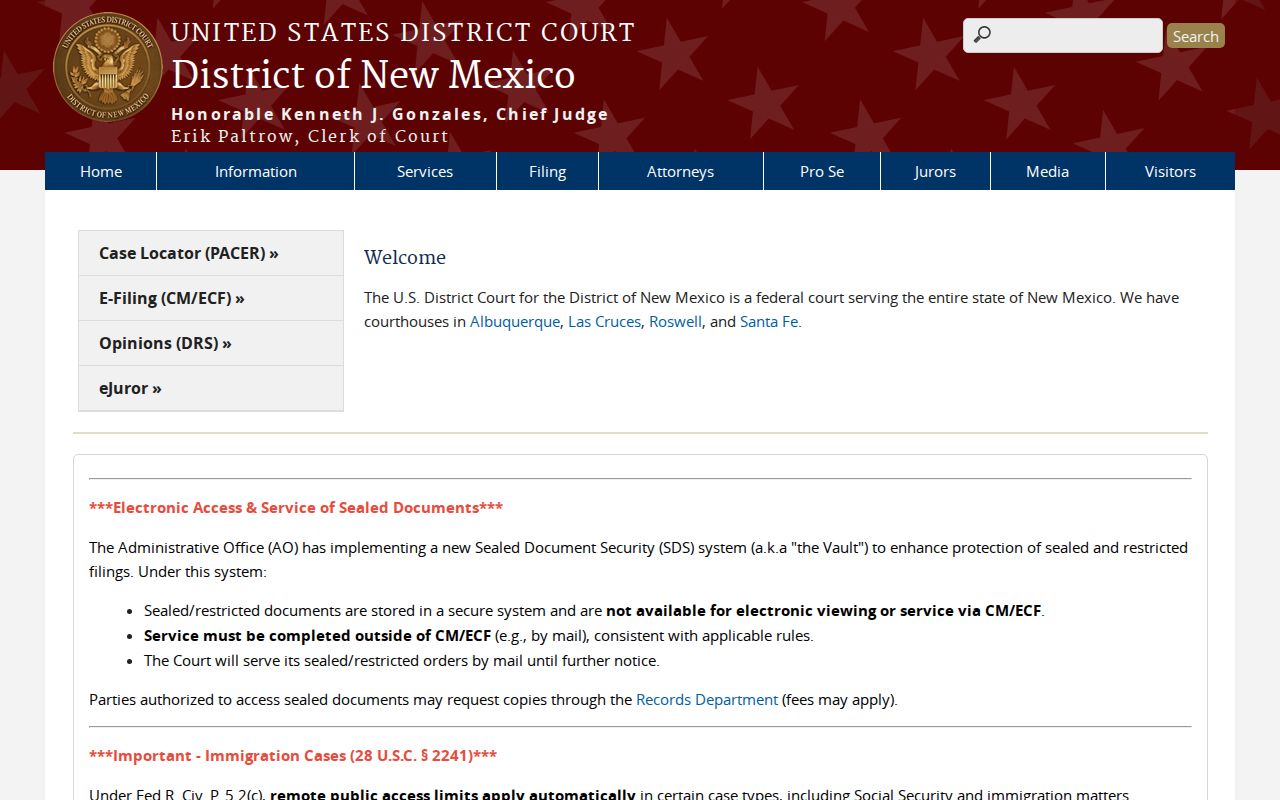
The image is a system reference, not a federal warrant roster or person profile.
No Union Bond Schedule Was Located
New Mexico's Form 9-212C does include a bond route, and the state's criminal forms cover cash bonds and forfeiture. Union County publishes no bond schedule. It lists no local bondsman, payment method, or arrest-warrant fee either. Take no figure on faith. Ask the issuing court what the order allows: cash, surety, personal recognizance, or some other release condition. A lawyer can explain what that order means in your case.
After an Arrest Warrant Is Served
Serving an arrest warrant is an event, not the close of the case. The Union County court may record the return, set a first appearance, and impose release terms while the criminal matter moves ahead. Keep the case number, release order, and receipt. AOC systems can update the case after service. The public screen may lag. Save any clearance or cancellation notice, and note the next setting the court gives you. If a later public result conflicts with the written order, ask the clerk which system needs updating.